
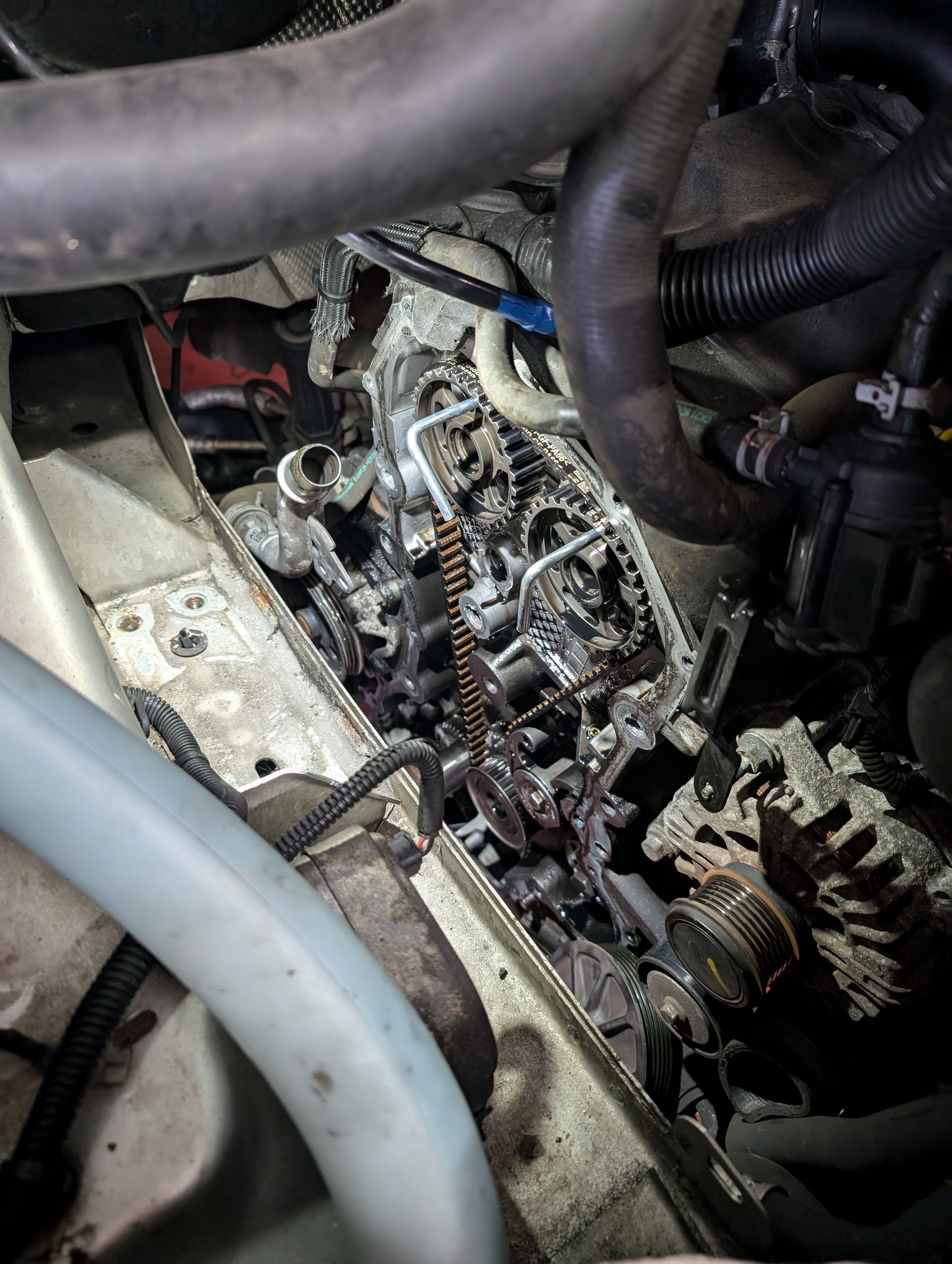
Ford 2.0 ecoblue ‘Wet’ Timing Belts
At CXD Autotech, we offer full timing belt replacement in Gloucester on Ford Transit 2.0 EcoBlue “Panther” Engines, using genuine Ford parts and correct timing tools to keep your van on the road when you need it, and to give you the piece of mind that it will stay that way.
wET bELT faq’S
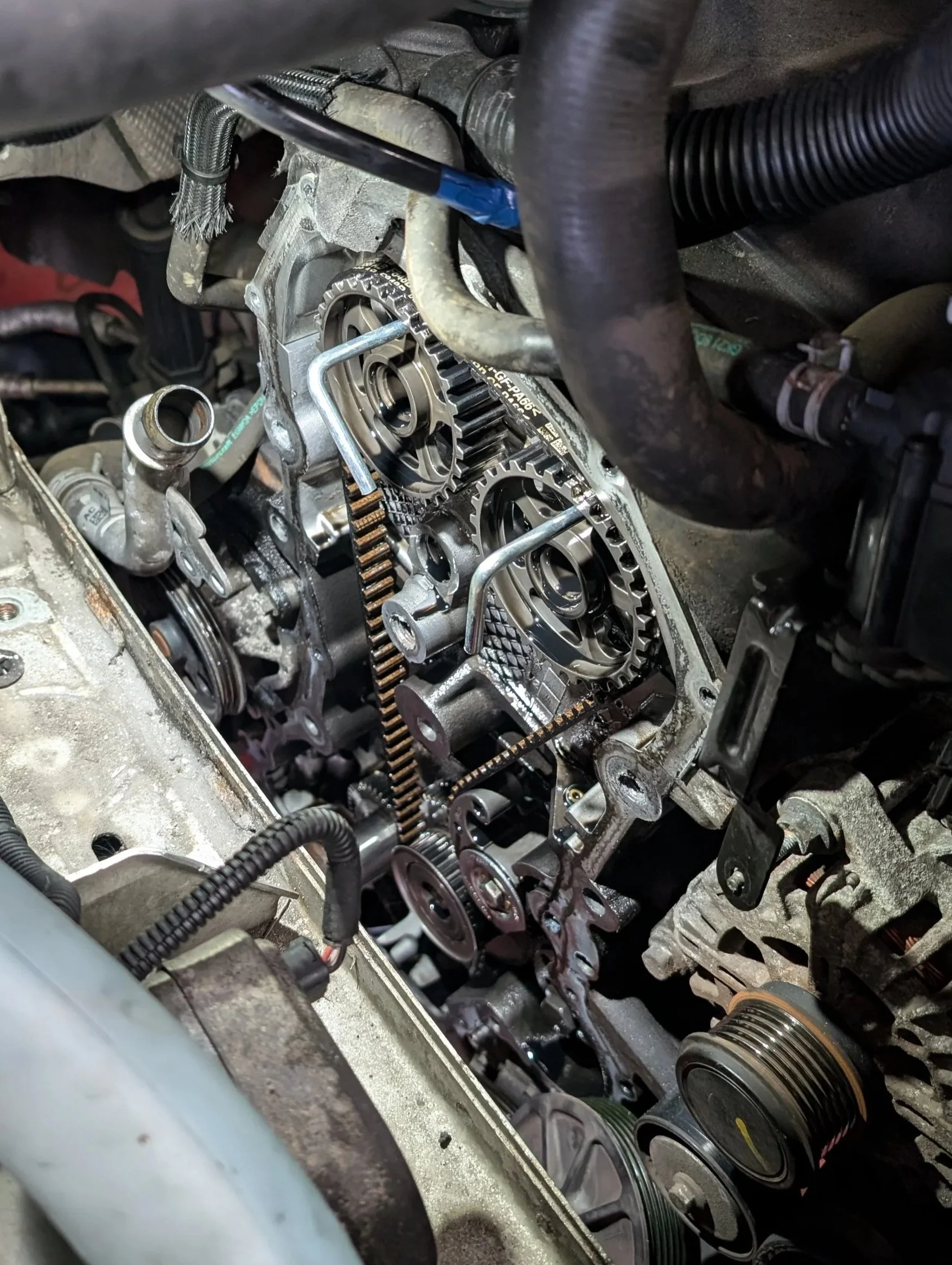
A “Wet” timing belt is present on the engine to do the same job as a conventional timing belt or chain - to keep the camshaft(s) and crankshaft in perfect synchronisation. However, unlike conventional timing belts that run outside the engine, a wet timing belt runs inside the engine and is lubricated by the engine oil. Made of a rubber composite reinforced with internal fibres, it is specially designed to operate whilst submerged in oil.
What is a “Wet” belt?
Why use an oil lubricated belt?
Wet timing belts are actually a good idea in theory. As they are coated in engine oil, this lowers the amount of friction compared to a dry belt system, thus improving efficiency. Wet belts also run quieter and smoother than timing chains, whilst weighing less helping to reduce overall engine weight.
The main theory that wet belts were based on breaks down into three principals.
To reduce wear
Result in less heat build up
To extend service intervals
Why do they wear out early?
Real‑world use has shown these belts can begin degrading as early as 60,000 miles, sometimes sooner. In most cases they are needing replacement far sooner than Ford’s original “lifetime” expectation. The main reasons why these belts aren’t working out as planned is mainly down to oil contamination and heat degrading the rubber, causing swelling and softening. This causes the belt to shed particles, eventually causing the it to fail.
This process can be accelerated vastly depending on oil quality. Old and dirty engine oil, plus diluted oil due to DPF regeneration cycles can cause the life expectancy of the belt to reduce drastically.
What happens if you don’t replace it?
Aside from the risk of the belt failing, resulting in the camshaft and crankshaft timing going out of sync causing internal engine damage - wet timing belts also pose another risk to the engine that dry belts do not. As the belt is located inside the engine, particles that shed from the belt as it wears end up being released into the oil system. This then leads to a build-up of the particles elsewhere, particularly in crucial oilways, blocking or reducing oil pressure to the point of potentially catastrophic failure.
wHEN SHOULD YOU REPLACE A WET BELT?
The official guidance from Ford as to when the belt needs replacing is after 6 years or 100,000 miles, whichever comes soonest. However as the life expectancy of the wet belt is directly related to the oil quality, many belts have been reported to have failed much sooner than the official Ford guidance, leaving owners with large repair bills.
wHAT IS INCLUDED IN A WET BELT SERVICE?
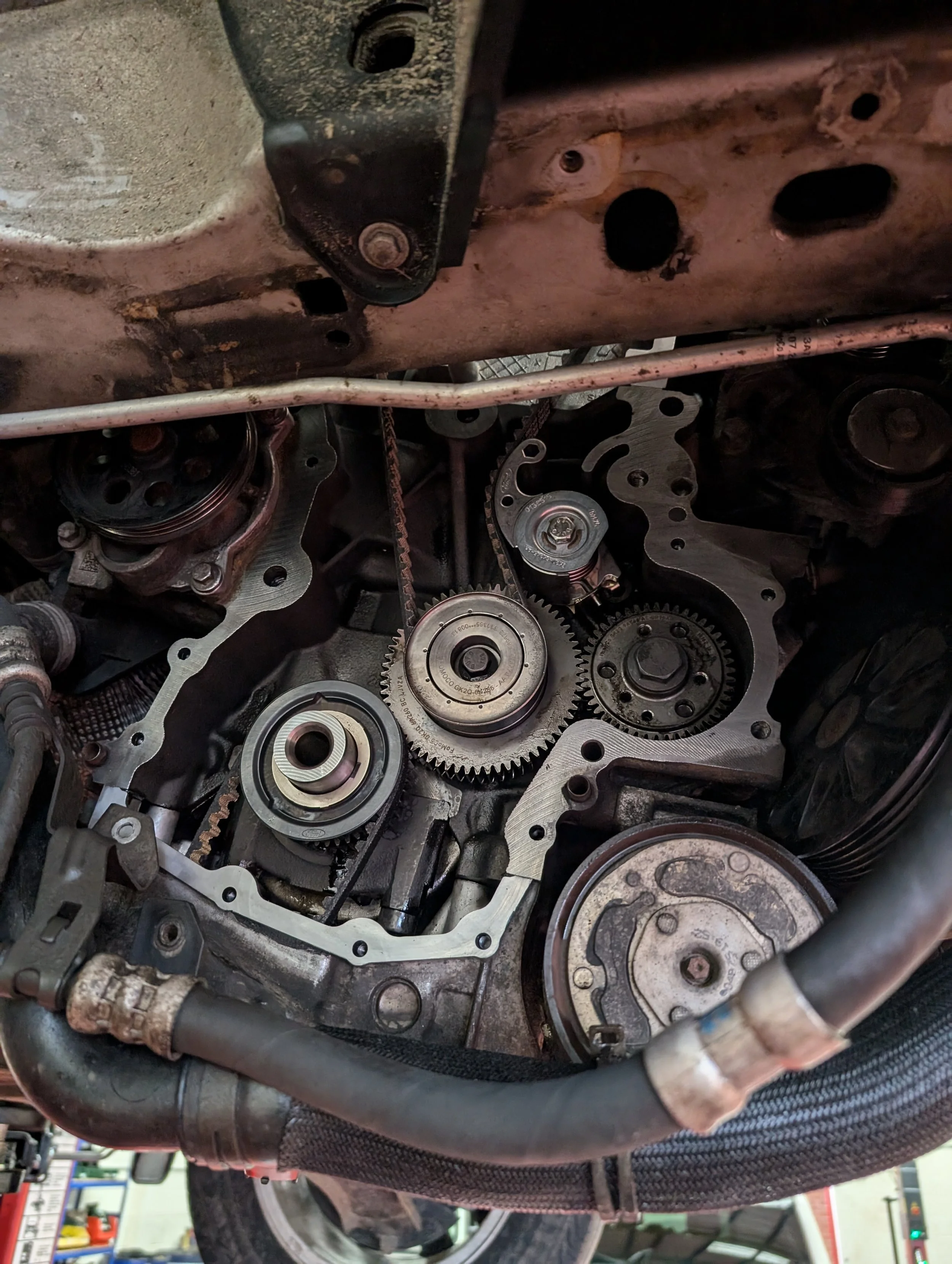
A wet belt belt service at CXD Autotech includes a genuine ford timing belt & oil pump belt, plus a belt tensioner, timing cover, oil pan, oil strainer, and all associated bolts. We also clean all accessible areas of the engine whilst it is apart to remove any debris and contaminants from the old timing belt. We then carry out a oil and filter replacement using a genuine Ford oil filter and the specific oil grade designed for use with wet timing belts.
hOW CAN I PREVENT WET BELT FAILURE?
Aside from replacing the wet belt before it fails, regular servicing with the correct oil grade is crucial to giving the belts the best chance as lasting as long as possible.